Rolex
Day-Date 36
128239
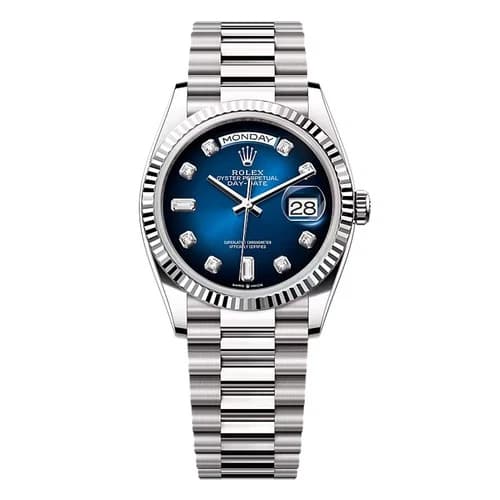
The 36mm white gold Day-Date, reborn around Rolex's modern manufacture calibre.
An estimate from current market data — not an offer. Your actual value depends on condition, completeness, and authentication.
Get an instant offerFree insured shipping. Paid within 48 hours of inspection.
Overview
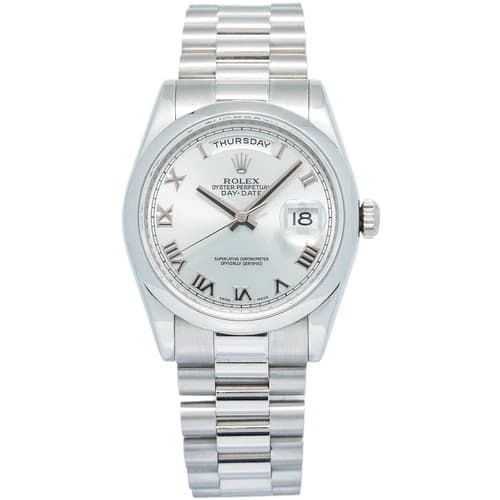
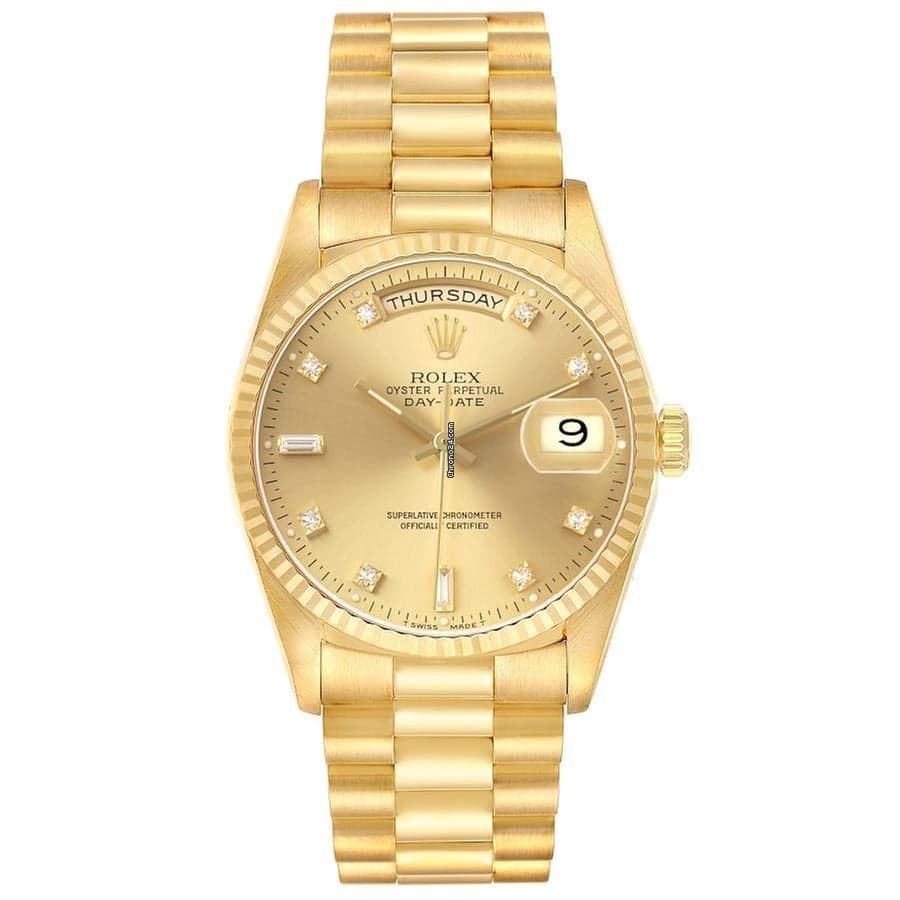
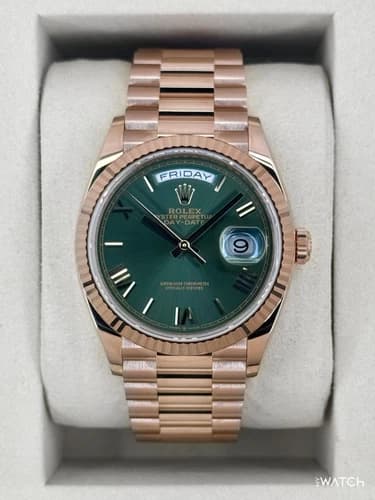
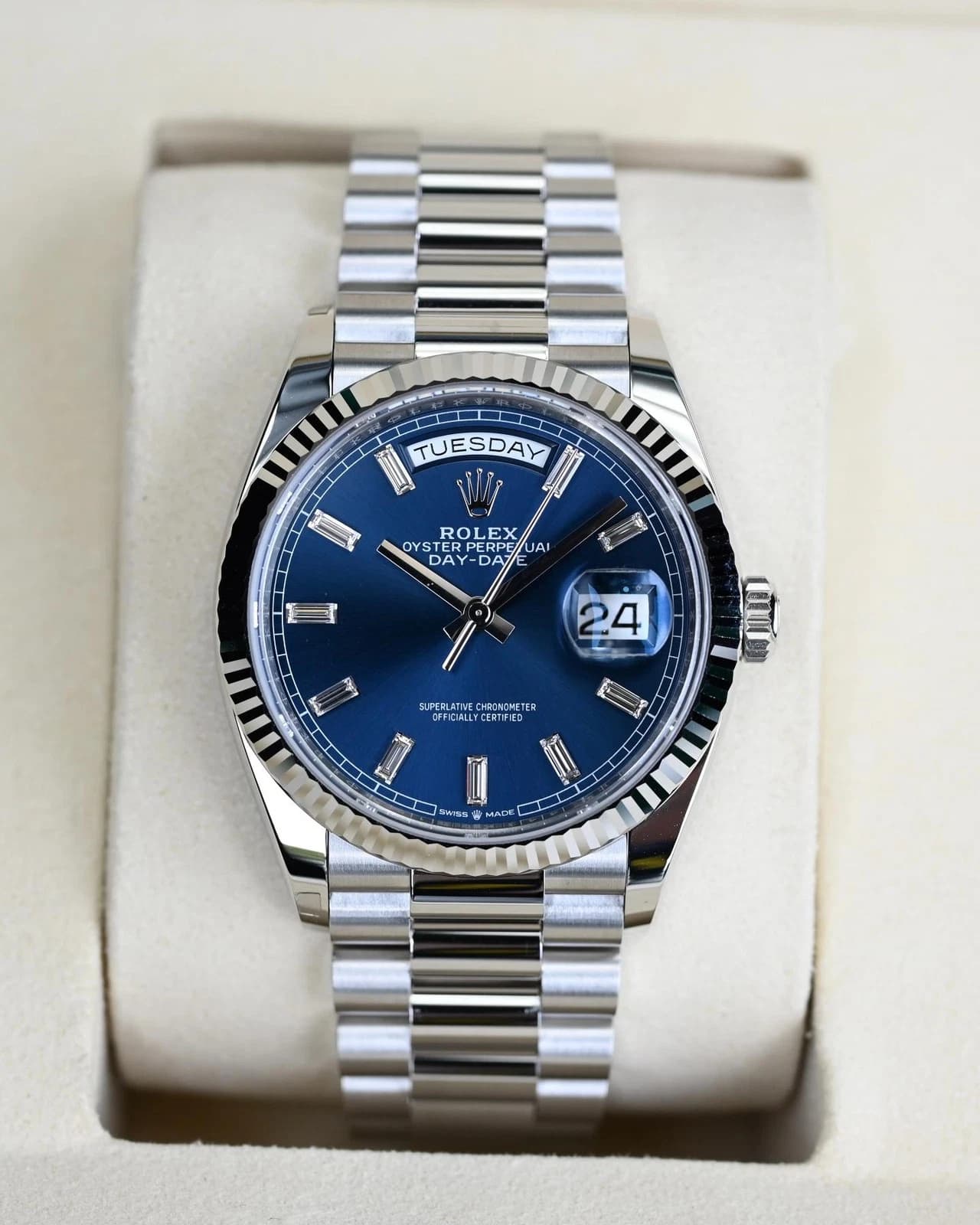
The Rolex Day-Date 36 reference 128239 represents the current generation of the classic 36mm Day-Date in 18k white gold, introduced in 2019. It pairs the line's signature president bracelet and dual-window dial — displaying both the day of the week spelled out in full and the date — with Rolex's in-house calibre 3255. Available across a range of dial executions including blue, silver, and black, the 128239 upholds the Day-Date's long-standing position as Rolex's premier dress watch.
History
The Day-Date line has been produced exclusively in precious metals since its debut in 1956, and the 36mm case diameter remained its defining format for decades. The 128239 succeeded the reference 118239, bringing with it the substantially upgraded calibre 3255 movement while preserving the proportions and aesthetic language that collectors associate with the original. Its introduction marked the broader rollout of the 3255 across the Day-Date 36 family, a transition that significantly advanced the movement's precision, power reserve, and shock resistance relative to its predecessor.
Notable points
- Crafted entirely in 18k white gold — case, bezel, and president bracelet — in keeping with the Day-Date's precious-metal-only tradition.
- Calibre 3255 offers a 70-hour power reserve and incorporates Rolex's Chronergy escapement, a significant advancement over the earlier calibre 3155.
- The 36mm case diameter honours the original Day-Date format, offering a more restrained alternative to the larger 40mm Day-Date 40.
- Dial variety is broad: blue, silver, and black lacquer are among the options, with some references featuring diamond or other stone-set indices.
- The fluted bezel, a hallmark of white gold Day-Date references, serves both an aesthetic and a historical role — originally used to conceal the seam of two-piece cases.