Rolex
Cosmograph Daytona
16520
The Zenith-era Daytona that redefined modern sports chronography.
An estimate from current market data — not an offer. Your actual value depends on condition, completeness, and authentication.
Get an instant offerFree insured shipping. Paid within 48 hours of inspection.
Overview
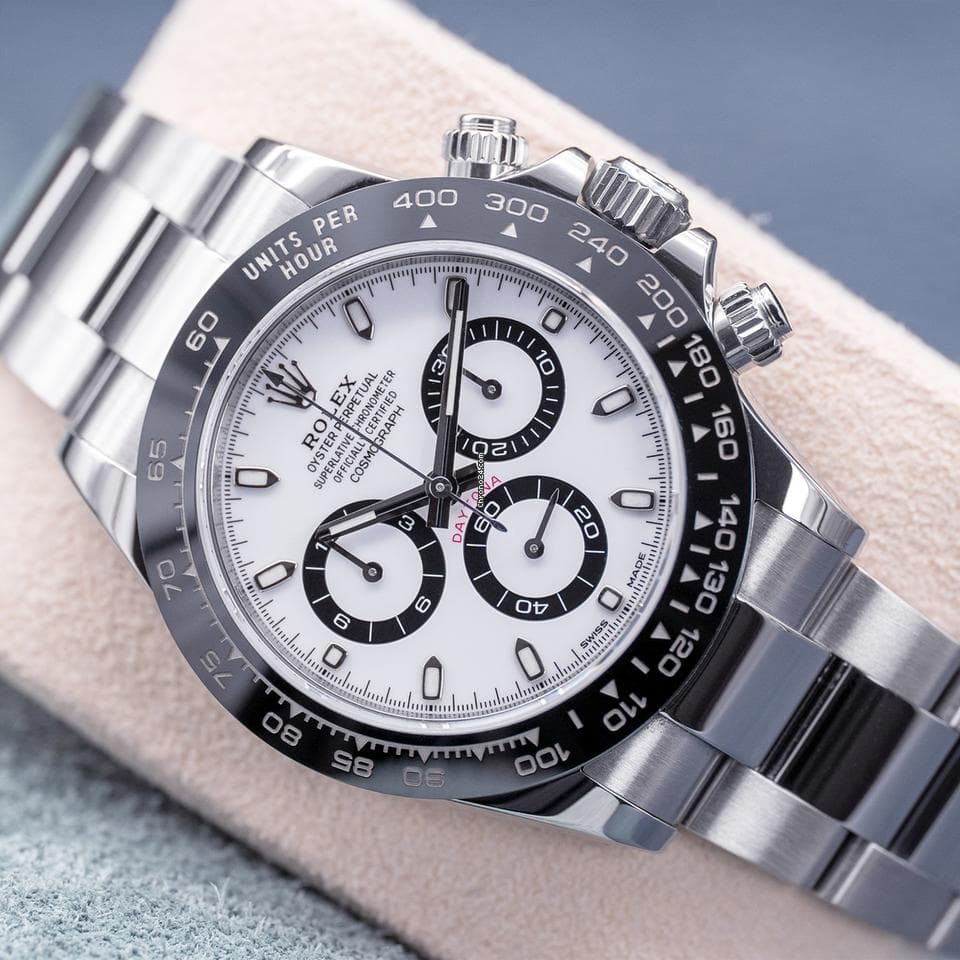
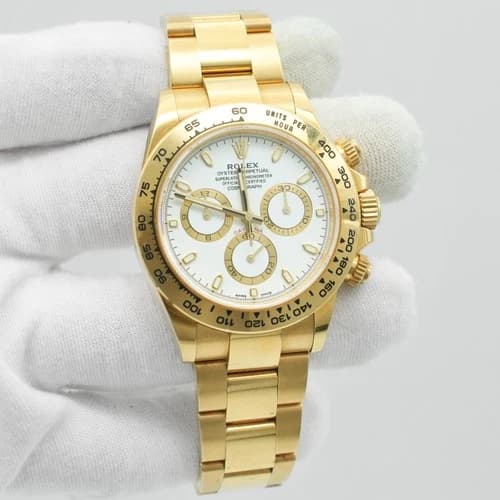
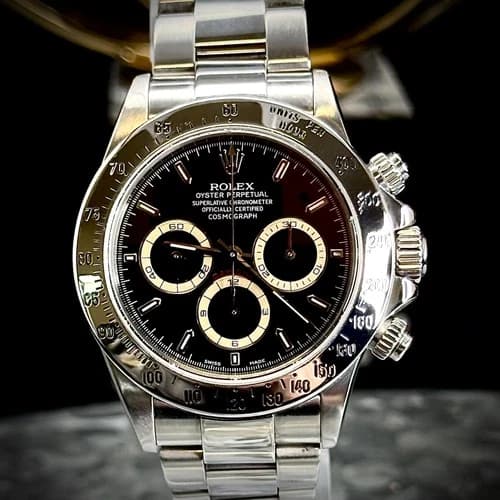
The Rolex Cosmograph Daytona reference 16520 represents a pivotal chapter in the Daytona lineage, marking the model's transition from manual-winding movements to an automatic calibre for the first time. Produced across roughly twelve years from 1988 to 2000, it houses the Calibre 4030 — a heavily modified derivative of the Zenith El Primero — within a 40 mm stainless steel case. Available with both white and black dials, the 16520 is widely regarded as one of the most significant references in the entire Daytona family.
History
The reference 16520 arrived in 1988 as Rolex's answer to growing demand for an automatic Daytona, ending a long era of manual-wind chronographs in the line. Rather than develop an in-house automatic calibre immediately, Rolex sourced the Zenith El Primero movement and substantially reworked it — reducing its beat rate and replacing numerous components — to meet Rolex's own tolerances and serviceability standards. The result, designated Calibre 4030, retained the El Primero's column-wheel architecture while bearing Rolex's unmistakable finishing. The 16520 remained in production until 2000, when it was succeeded by the reference 116520 carrying Rolex's first fully in-house chronograph calibre, the Cal. 4130.
Notable points
- The Calibre 4030 is a heavily modified Zenith El Primero, with Rolex replacing a significant proportion of the original components to conform to its own specifications — making it a distinct movement in its own right.
- The 16520 was the first Daytona to offer automatic winding, a landmark shift for a line that had relied exclusively on manual-wind movements since its 1963 introduction.
- Dials were produced in both white (sometimes called 'panna') and black variants, with sub-dial and print variations across the production run that are closely studied by specialists.
- The 40 mm stainless steel case, while modest by contemporary standards, represented a refined evolution of the Daytona's classic silhouette and retained the signature screw-down pushers and tachymeter bezel.
- The 16520 bridges two eras of Daytona history — the hand-wound vintage references before it and the fully in-house automatic era that followed — giving it a singular position in the reference's long chronology.