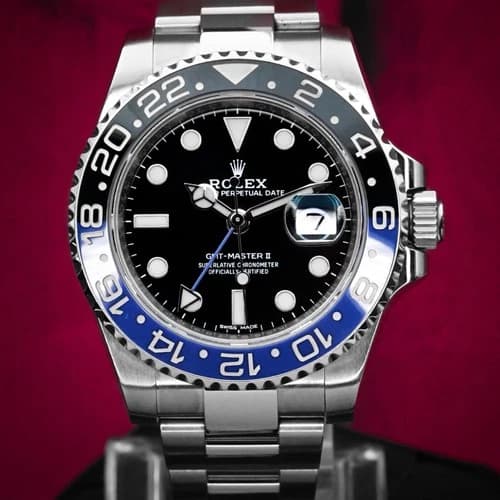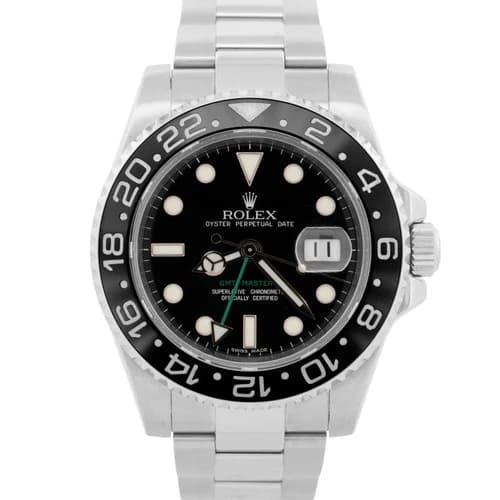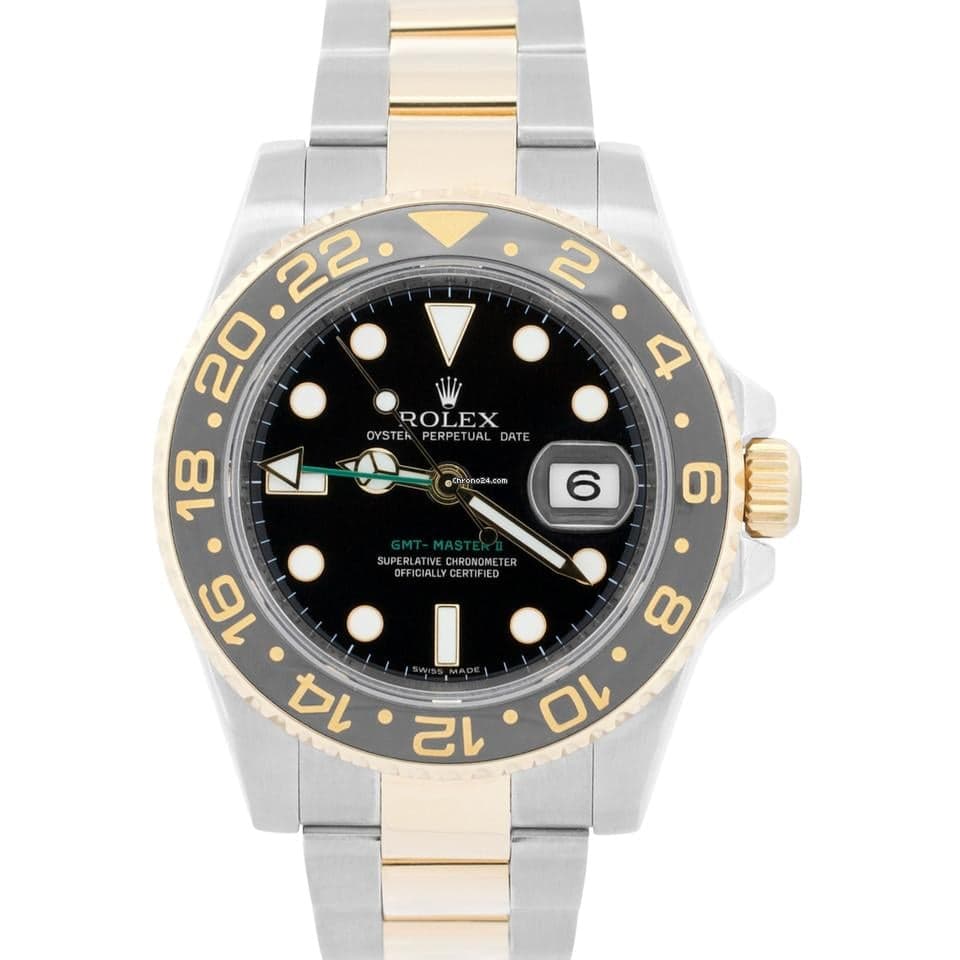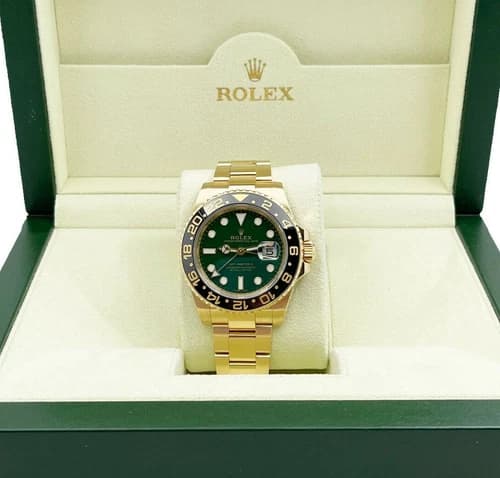
Rolex
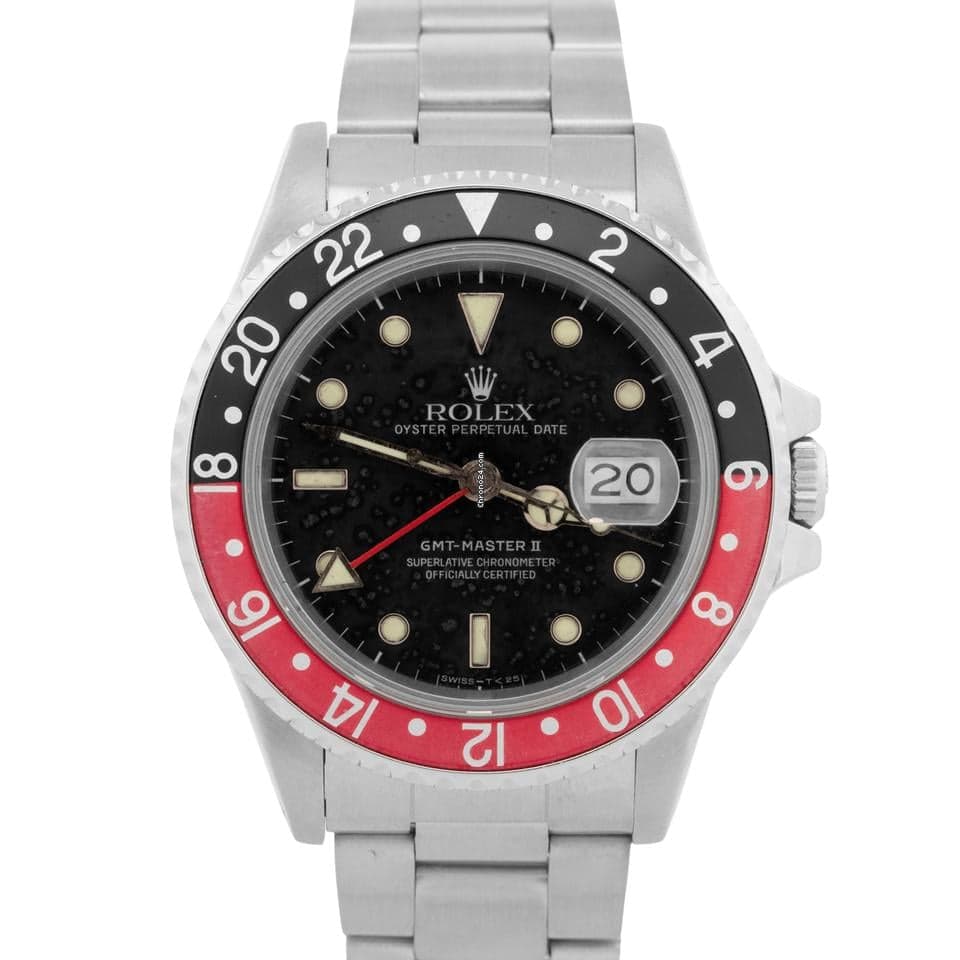
GMT-Master II
16760
The original GMT-Master II — where independent GMT hand adjustment began.
An estimate from current market data — not an offer. Your actual value depends on condition, completeness, and authentication.
Get an instant offerFree insured shipping. Paid within 48 hours of inspection.
Overview
The Rolex GMT-Master II reference 16760 stands as the inaugural expression of the second-generation GMT-Master line, introduced in 1983 as a direct evolution of the long-running GMT-Master. Its defining advancement was the calibre 3085, which for the first time allowed the local hour hand to be set independently of the GMT hand — a meaningful functional leap over its predecessor. Produced through 1988, the 16760 occupied a brief but pivotal chapter in Rolex sports-watch history.
History
The reference 16760 emerged at a moment when Rolex sought to address a practical limitation of the original GMT-Master: the inability to set the local hour hand without disturbing the 24-hour GMT hand. Debuting at Basel in 1983, the watch introduced the calibre 3085 with its quick-set, independently adjustable hour hand. The reference is also remembered for its slightly thicker case profile — a consequence of accommodating the new movement architecture — which earned it the affectionate collector nickname "Fat Lady." Production concluded around 1988, when the reference gave way to the refined 16710.
Notable points
- Powered by calibre 3085, the first Rolex movement to allow the local hour hand to be set independently of the 24-hour GMT hand.
- The case measures 40 mm in stainless steel but sits notably thicker than both its predecessor and successor, earning the enduring collector nickname 'Fat Lady.'
- Produced for only approximately five years, from 1983 to 1988, making it among the shorter-lived references in the GMT-Master lineage.
- The black dial version pairs with the iconic Pepsi (red/blue) or root-beer (brown/gold) bezel variants, though the black dial itself remained a consistent option across the reference.
- As the first GMT-Master II reference, the 16760 holds a foundational place in Rolex horological history and is regarded as a significant transitional piece by collectors.